The photographic record
All twenty-five plates
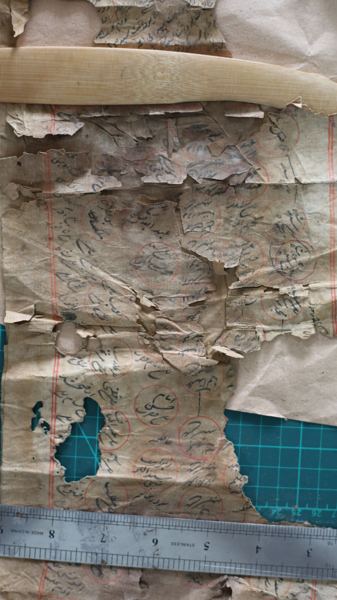
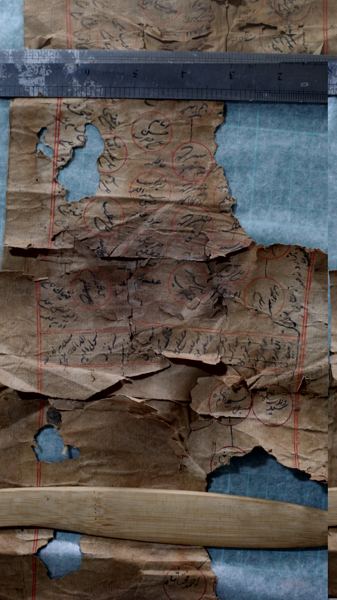
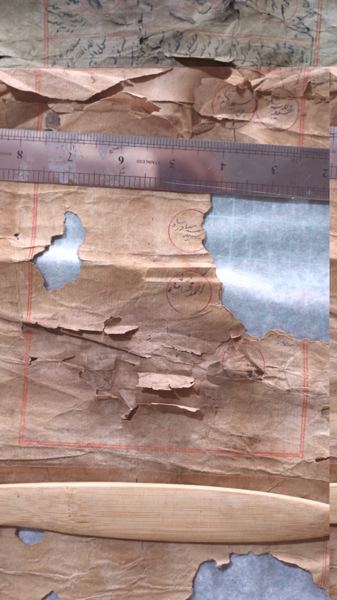
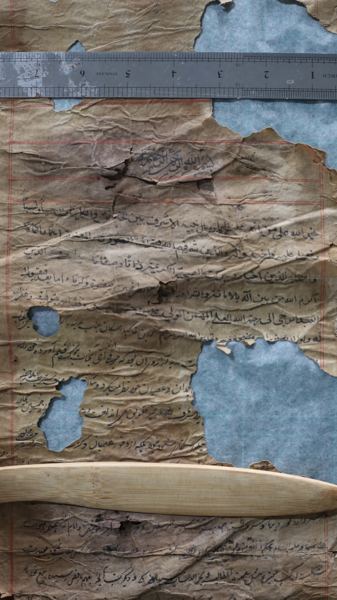
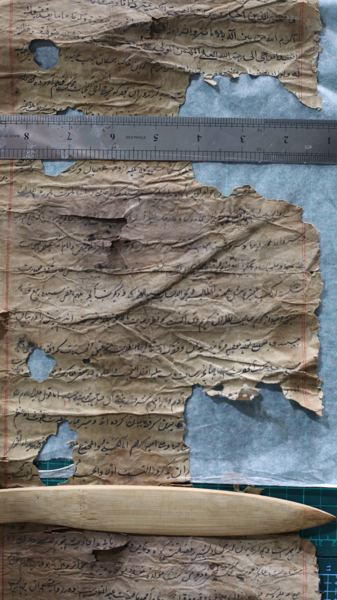
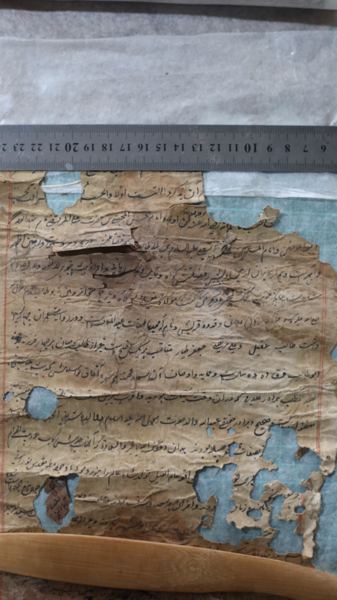
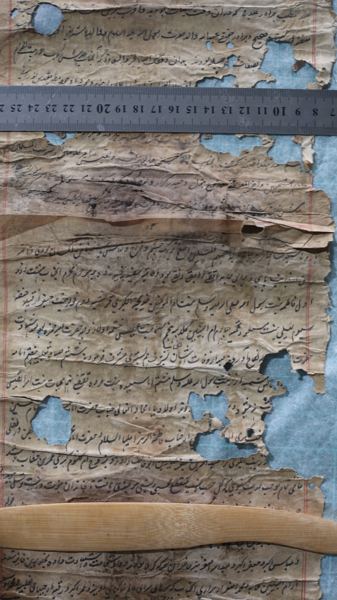
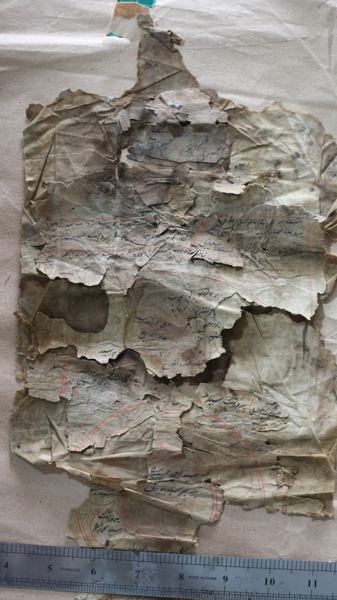
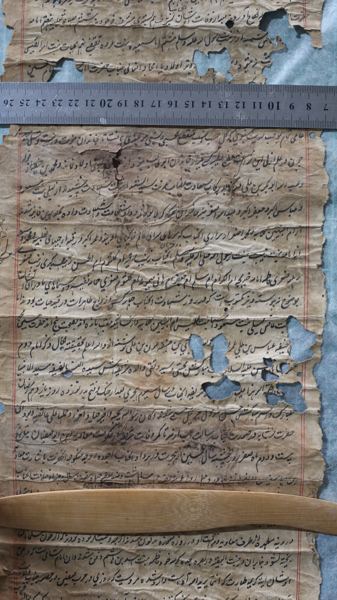
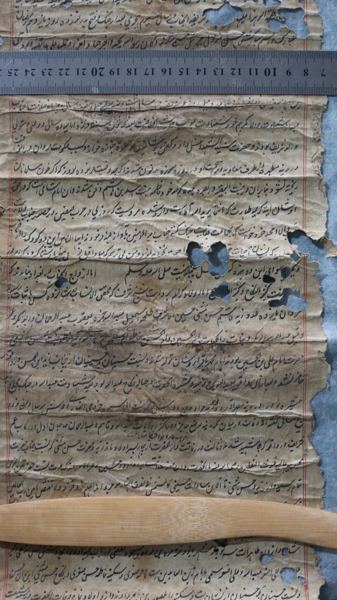
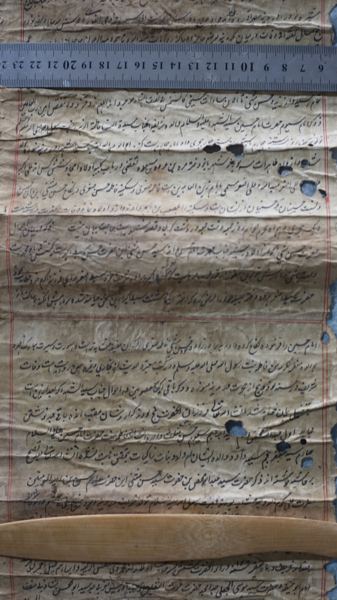
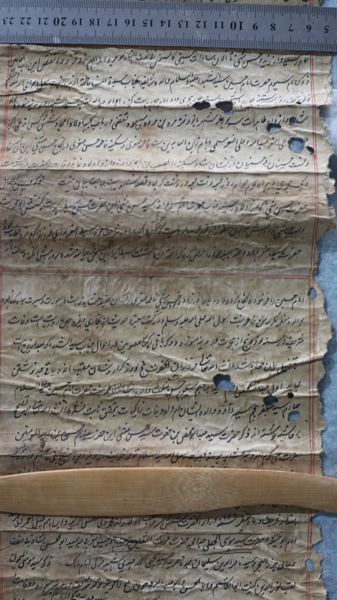
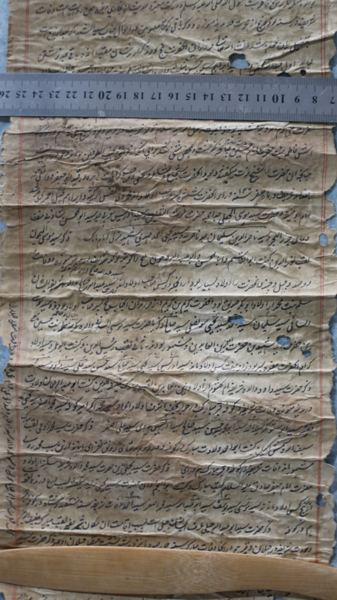
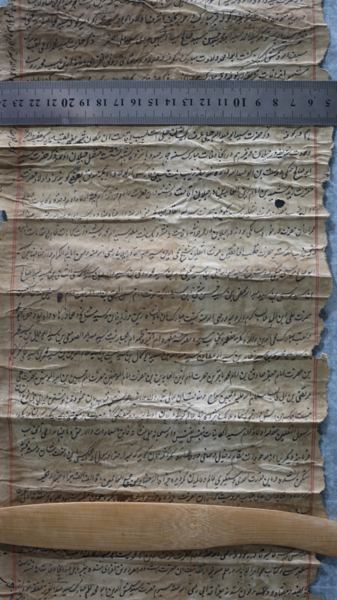
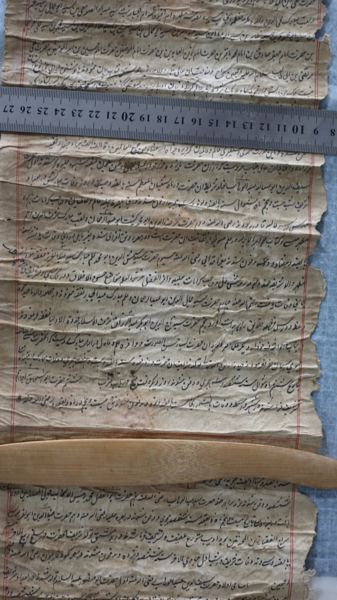
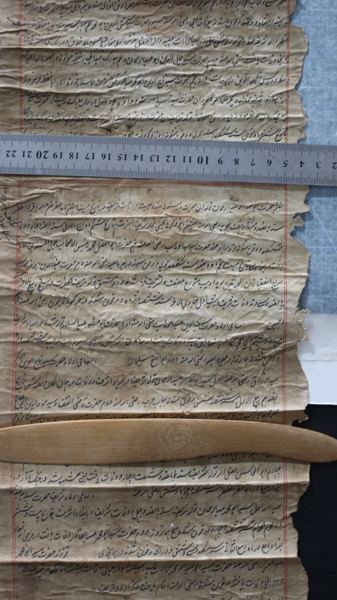
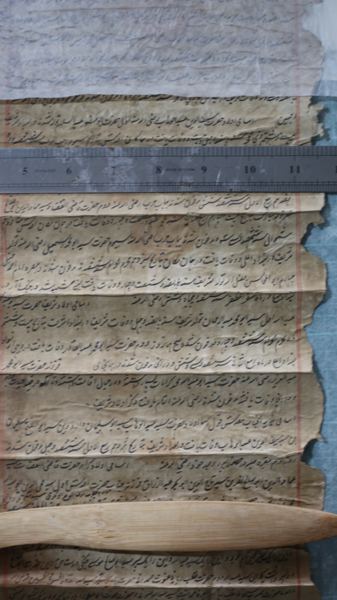
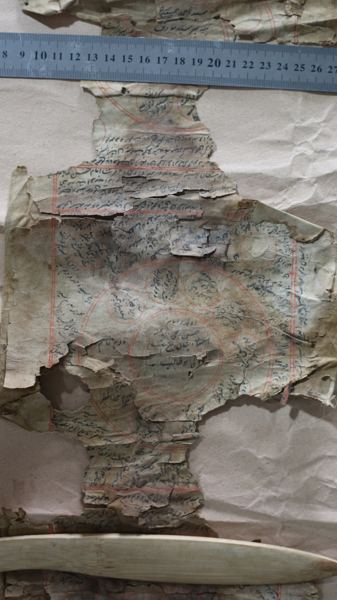
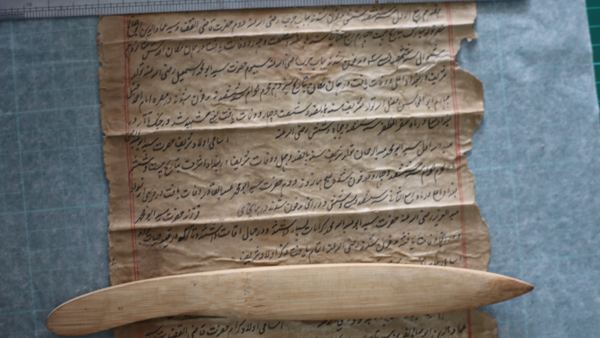
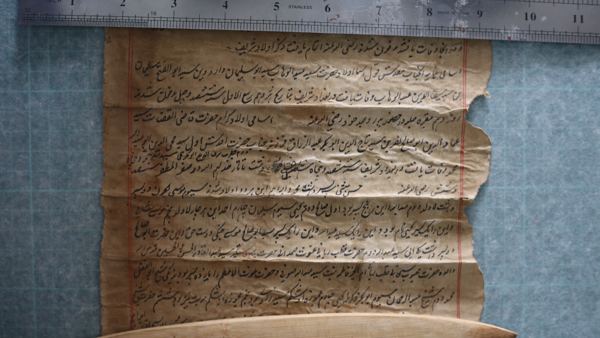
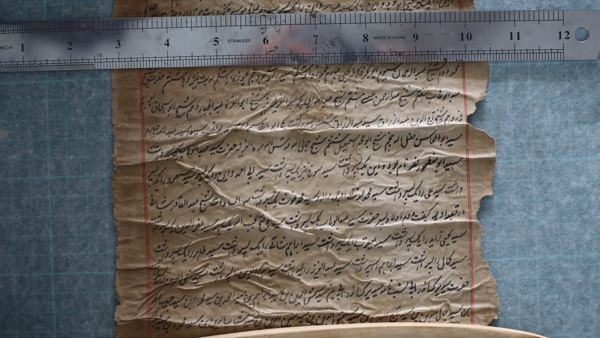
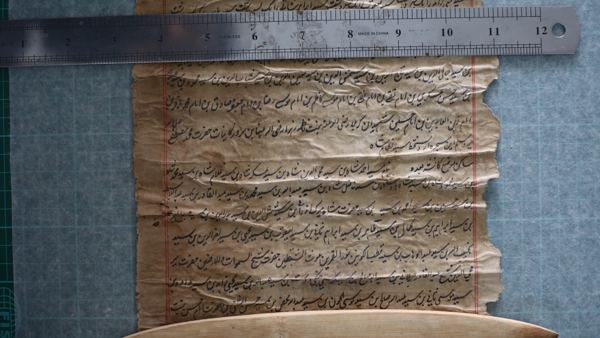
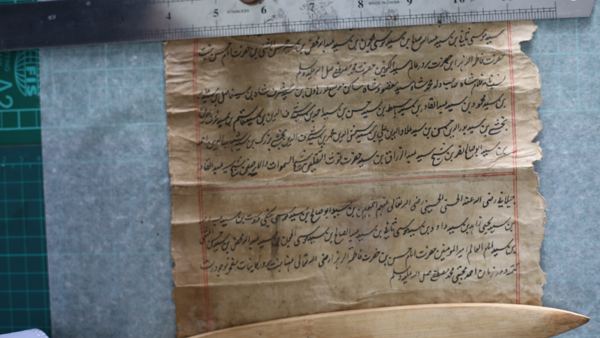
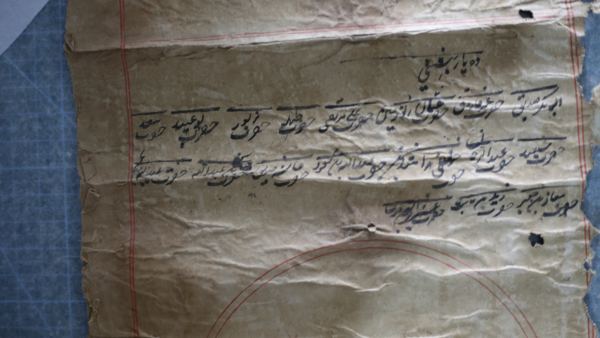
Photographs documenting the scrolls as they were received. Tap any plate to view it enlarged.
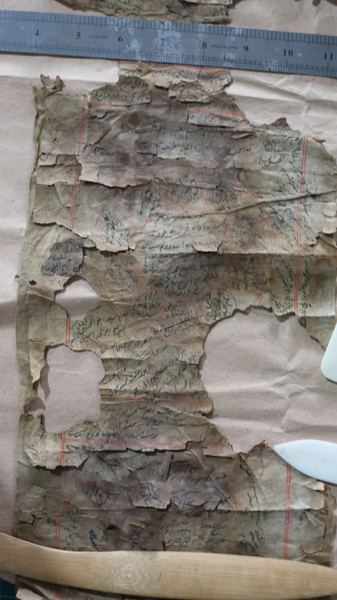
The Three Scrolls
What returned to the family in early 2026 was three separate scrolls, each in a different state of survival. This is the account of what each held, and what could be saved.
The division
Length 9 ft 1 in. Severely damaged and brittle. Burnt and oxidised by age until the greater part could no longer be read, though some areas of writing partially remain. It survives now chiefly as a witness to how close the whole record came to vanishing.
This scroll carried family trees and names in Arabic and Persian, difficult to make out in full. The majority of its content has been lost. We took it to those who might help us read it, and worked to recover what we could of the names it holds.
Length 15 ft. Brittle, and severe in certain areas, but the majority of the writing survives intact — continuous passages recounting the lineage and the lives of our ancestors. We had it transcribed and translated; it forms the backbone of this record. Its translation appears on the Translation page.
The conservation assessment
To understand what could be saved, the three scrolls were examined by the Archives Conservation Laboratories in Karachi. Their assessment confirmed what our eyes had feared: the damage ran deep, and through all three. The common agents of deterioration were burns — which had already claimed a large portion of the writing — together with heavy oxidation, prolonged exposure to humidity and water, and insect attack.
Having been kept in conditions of high heat and humidity, the scrolls had undergone severe chemical and mechanical degradation. The conservators noted stubborn white patches across all three, where the paper had become fused to the cloth backing beneath it, and warned that the paper had grown so brittle it could deteriorate further with any careless handling.
Length: 9 ft 1 in · Severely damaged, brittle
Most of the scroll is damaged, though some areas of writing partially remain. Assessed as restorable.
The greatest loss
The majority of its content is gone. The conservators did not recommend full restoration — only a few disconnected areas of writing could be revived, without continuity.
Length: 15 ft · Brittle, severe in places
The majority of the writing survives intact, with some areas of severe loss. This is the readable scroll — and, like the first, assessed as restorable.
Restoration would mean carefully detaching each surviving fragment of writing from the cloth beneath, then cleaning, deacidifying, and mounting it on a new support — using specialist materials imported from abroad. Painstaking, and costly.
The decision
We faced an honest truth: restoration would preserve the physical condition of the scrolls, but it would not recover the lost lineage or make the damaged portions readable again. The names that had faded would not return. What restoration offered was the survival of the objects themselves — the fragile originals our forefathers had written.
Weighing this, we chose to move the scrolls to a conservation laboratory in Lahore for preservation — to hold them safely against further decay, so that the originals endure alongside the record we recovered through transcription, translation, and the authenticated chart from Uch Sharif.
The lineage itself is now safe — read, translated, and documented on this site. The scrolls are being preserved as sacred objects in their own right. The record survives in both its meaning and its material.
The photographic record
Photographs documenting the scrolls as they were received. Tap any plate to view it enlarged.